Gillead Safaris

Culture & Heritage

Tanzania is not just landscapes and wildlife. It is the Maasai warrior standing at sunset, the Hadzabe hunter reading the morning tracks, the spice-trader's carved door in Stone Town.

The Maasai — Warriors of the Plains

A way of life measured in cattle, not currency.

The Maasai are synonymous with Tanzania. For centuries, these semi-nomadic pastoralists have roamed the savannas of East Africa in vivid red shukas, their livestock the measure of their wealth and status.

The Maasai — Warriors of the Plains

A visit to an authentic Maasai village — known as a boma — offers an intimate window into a culture that has coexisted with wildlife for millennia. Witness the adamu (jumping dance), learn about traditional medicine, and understand how these warriors track lion prides on foot.

A visit like this is arranged directly with the community you meet, not through a third party — the aim is a real exchange, not a staged performance.

  • An estimated 1 million+ Maasai across Tanzania & Kenya
  • The adumu jumping dance is a rite of passage for young warriors
  • Cattle represent wealth and social status
  • A semi-nomadic, pastoralist way of life centred on livestock

Zanzibar Spice Island Heritage

A thousand years of trade, layered into every doorway.

Zanzibar's Stone Town is a living museum of Swahili civilization — a UNESCO World Heritage Site where Arab, Indian, Persian, and African cultures have been layered over a thousand years of trade into something entirely unique.

Zanzibar Spice Island Heritage

The narrow, winding alleyways reveal ornately carved wooden doors (the number of brass studs indicates the owner's wealth), hammams, merchant houses, and the haunting legacy of the Arab slave trade at the Old Slave Market.

Beyond Stone Town, Zanzibar's spice plantations produce cloves, vanilla, nutmeg, cinnamon, and black pepper. A guided spice tour connects food to origin in ways that permanently change how you experience flavour.

  • Stone Town declared UNESCO World Heritage in 2000
  • Over 30 spices grown on the island
  • Arabic, Portuguese, Omani, and British influences
  • The House of Wonders and Old Fort still stand in Stone Town today

The Hadzabe — Last Hunter-Gatherers

Ways of hunting and gathering, unchanged for ten thousand years.

The Hadzabe people of the Lake Eyasi region are one of the last remaining hunter-gatherer communities on earth. They live much as their ancestors did 10,000 years ago — moving with the seasons, hunting with handmade bows, and gathering wild honey and berries.

The Hadzabe — Last Hunter-Gatherers

A dawn walk with Hadzabe hunters is among the most extraordinary cultural experiences available anywhere in the world. They communicate through clicks (a phonemic feature shared with the Khoisan people of Southern Africa), read animal tracks in the dust, and build fires from a friction method mastered over millennia.

These encounters require sensitivity and are offered only to guests who engage with genuine respect. Photography is permitted only with individual consent.

  • One of the oldest languages on earth — using click consonants
  • Population: fewer than 1,300 people remain
  • No concept of land ownership
  • The men hunt; the women gather and prepare

Wildlife & Conservation Legacy

Nearly two in every five acres set aside, so the wild stays wild.

Tanzania protects 38% of its total land area for conservation — more than any other African nation. This extraordinary commitment reflects a deep cultural relationship with wildlife that predates colonialism by thousands of years.

Wildlife & Conservation Legacy

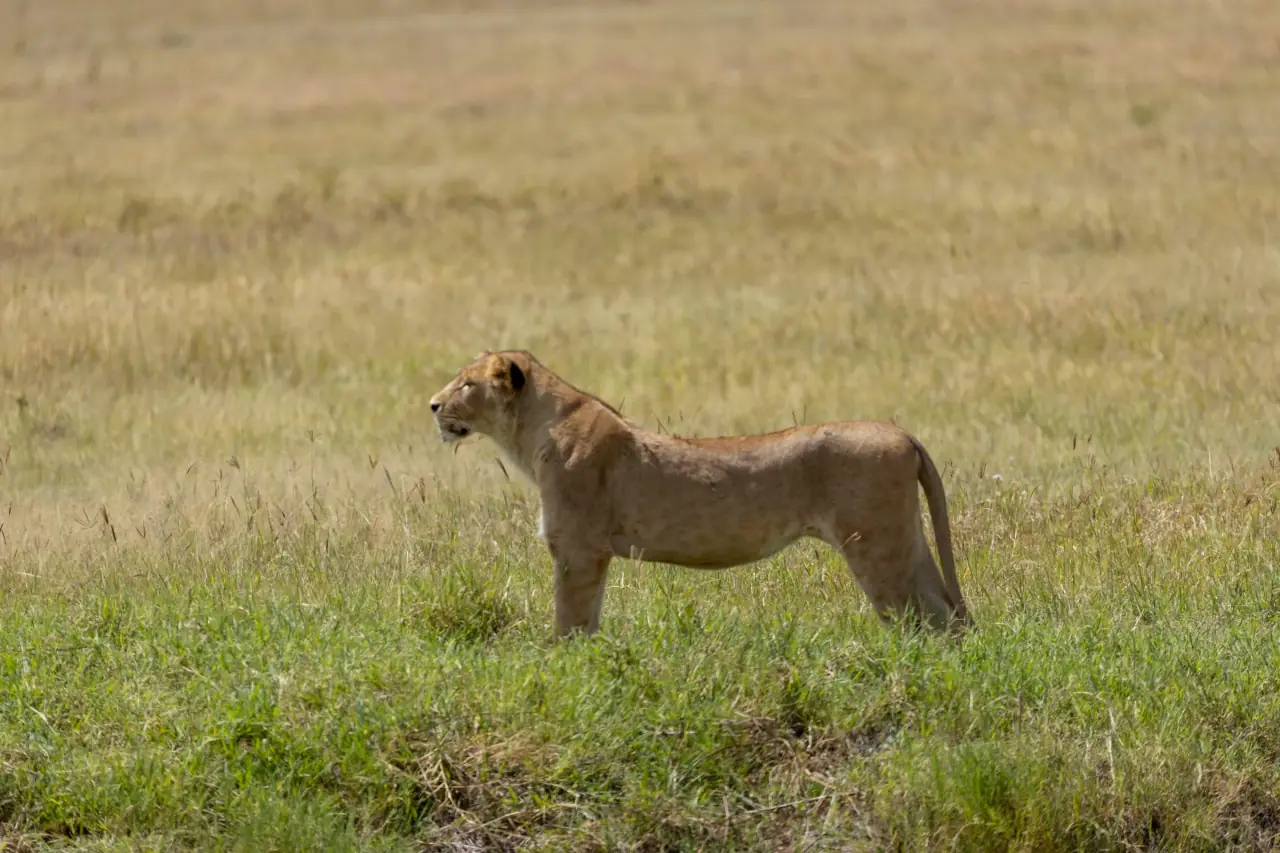
The Ngorongoro Conservation Area is a model of coexistence: Maasai pastoralists live within the world's greatest wildlife sanctuary, managing their cattle alongside buffalo, elephant, and lion in a balance refined over generations.

It's a commitment upheld by thousands of rangers, researchers, and Maasai communities working alongside these parks every day — the reason there's still this much wildlife left to see.

  • 38% of Tanzania is protected conservation land
  • Over 4 million animals in the Serengeti ecosystem
  • The Ngorongoro Conservation Area — UNESCO designation 1979
  • Thousands of rangers patrol Tanzania's parks and reserves

Made by hand

Pots coiled and fired in the open, baskets woven from palm, drums stretched with hide, dhows still built plank by plank on the beach. Tanzania's culture lives in what people make every day, and most of it ends up in the markets you'll walk through.

Stone Town's craft alleys

Stone Town's craft alleys

Woven bags, kanga cloth and carvings spill out of the doorways in the old town, a few minutes from the Old Fort.

Clay pottery

Clay pottery

Hand-coiled and fired in the open, these pots are still used to store water and keep it cool.

Ngoma drums

Ngoma drums

Usually carved from a single log and stretched with hide. Ngoma means both "drum" and "dance" in Swahili.

Market colour

Market colour

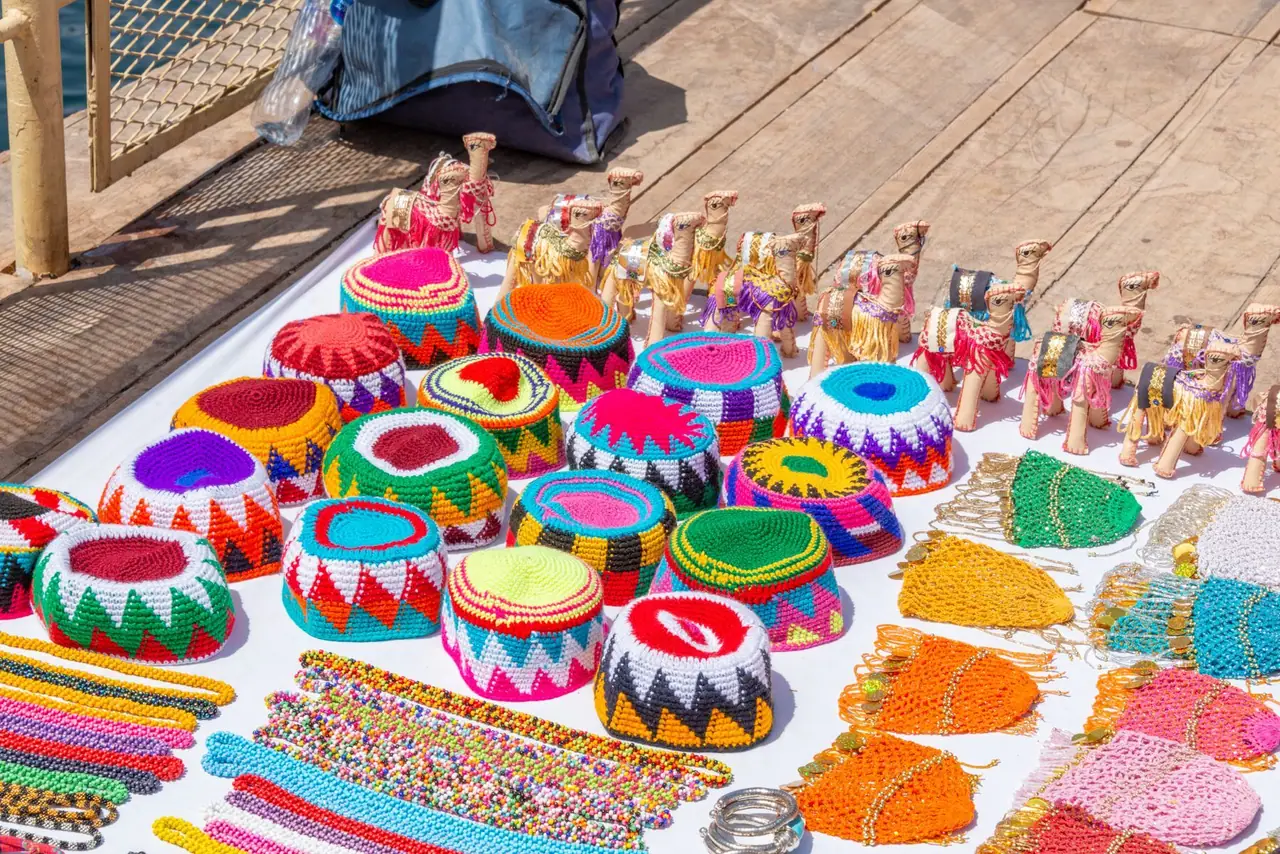
Hand-crocheted caps, beaded bracelets and carved keepsakes, laid out in every shade.

Woven baskets

Woven baskets

Palm and sisal fibre, dyed and coiled by hand into baskets that last for years.

Zanzibar spice

Zanzibar spice

Chillies drying in the sun, part of the spice trade that built the island.

Dhows built by hand

Dhows built by hand

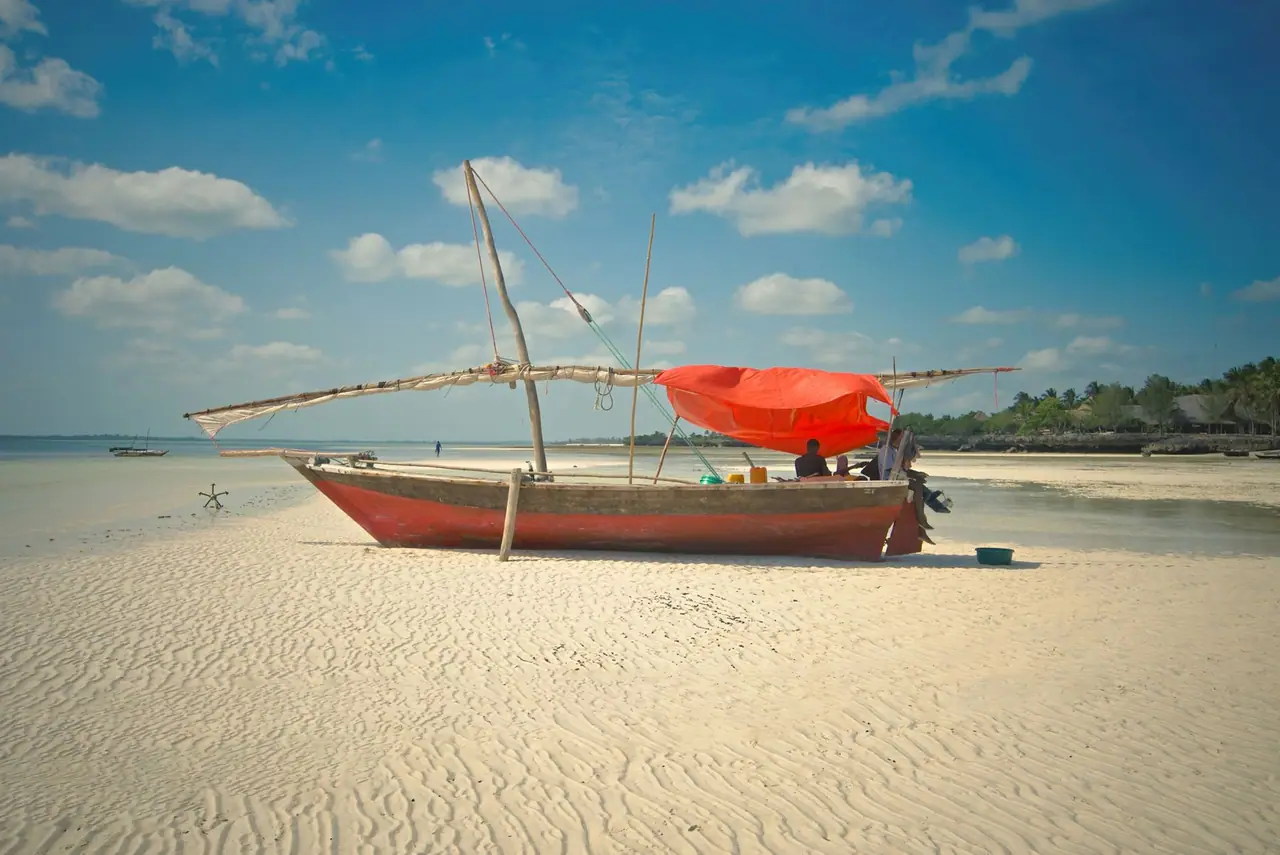
Wooden sailing dhows are still built on the beach by eye and by hand, the way they have been for centuries.

Flavours of East Africa

Nyama Choma

Roasted meat over open flame — the foundation of Tanzanian celebration

Pilau Rice

Zanzibar spiced rice perfumed with cardamom, cloves, and cinnamon

Ugali & Sukuma

Stiff maize porridge with braised collard greens — the everyday staple

Zanzibar Pizza

A delicious street-food hybrid of Indian and African flavours from Forodhani

Experience Culture First-Hand

Our cultural add-ons can be woven into any safari itinerary. Ask us about Maasai village visits, Hadzabe hunting experiences, and Zanzibar spice tours.